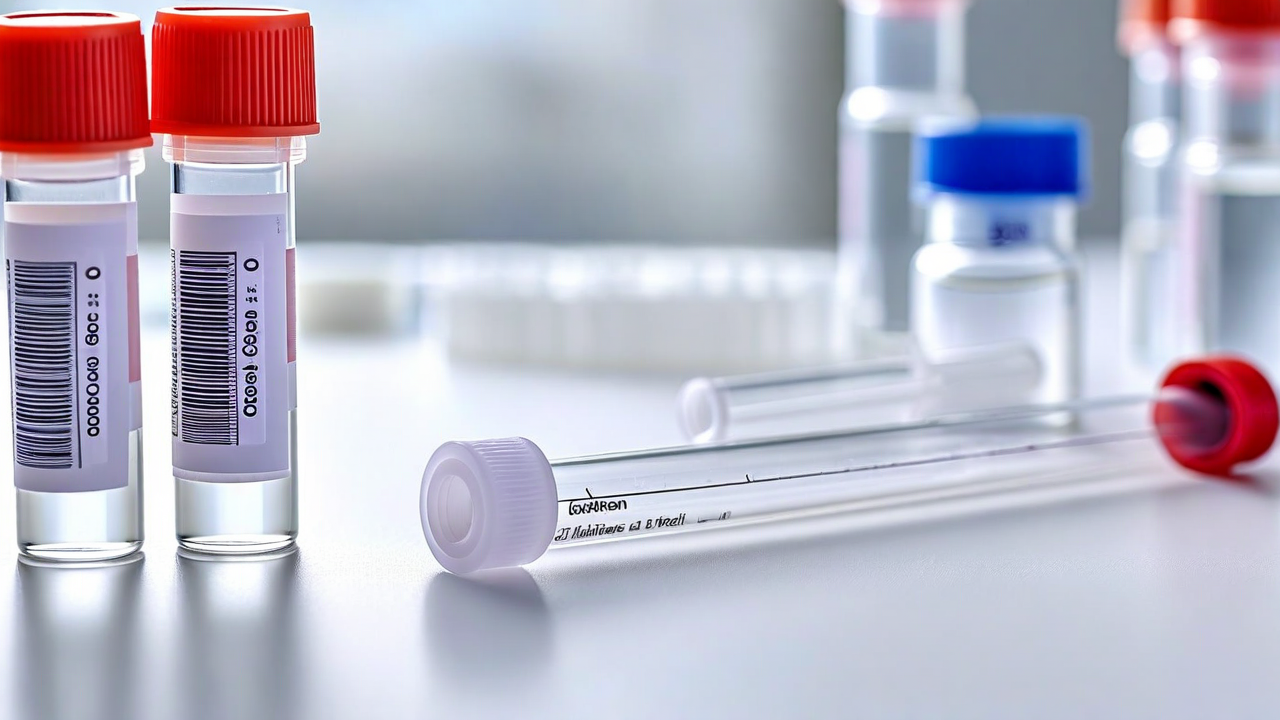
When we were building the GeneLens collection protocol, saliva versus blood wasn't a foregone conclusion. Blood draws produce higher-quality DNA in a single standardized sample. If we were designing a clinical workflow, that would likely be the right answer. But we're not building a clinical workflow. We're building a tool for people at home, and that changes the calculus significantly.
Here's how we thought through it, and why we landed where we did.
DNA is DNA, wherever you get it
Every nucleated cell in your body contains the same genomic DNA. A blood draw yields white blood cells, which are an excellent DNA source. Saliva yields buccal cells from the lining of your cheek, plus some white blood cells that are naturally present in the oral environment. The DNA sequence is identical. The difference is in the quantity and concentration of starting material.
A standard venous blood draw produces a high-yield, relatively clean DNA source. Saliva yields less total DNA per volume, and it contains bacterial DNA and enzymatic contaminants that require additional processing steps to work around. Early-generation saliva collection methods struggled with these issues. Modern collection devices, including the ones in our kit, use proprietary buffer solutions that stabilize the cellular DNA and suppress contamination before the sample even leaves your home.
The real-world tradeoffs
A blood draw requires a trained phlebotomist, a clinic visit, a needle, and a cold chain to preserve the sample in transit. For a clinical test that someone orders once a decade, that's manageable. For a consumer product that people order from their couch, it creates a barrier that doesn't need to exist.
Beyond convenience, there's a meaningful population of potential users who can't give blood easily - people on anticoagulants, those with needle phobias, people who are immunocompromised, or those without easy access to phlebotomy services. A collection method that excludes those users isn't a neutral technical choice. It's a decision about who gets access to genetic insights and who doesn't.
Saliva collection also reduces biohazard handling complexity in the postal system, which matters for scale. A genotyping lab receiving thousands of samples daily has much simpler logistics with stabilized saliva tubes than with frozen blood.
Our quality validation process
The legitimate concern with saliva is sample failure rates. If the DNA yield is insufficient for genotyping, the customer has to collect again, which is frustrating and introduces delay. Our internal target for sample success rates is above 98%. Achieving that required testing multiple collection device formats, varying buffer chemistries, and running extensive quality control studies before we settled on the current kit design.
We also run a pre-genotyping quality check on every incoming sample. Absorbance ratios and fluorometric quantification confirm DNA integrity before the sample goes onto the array. If a sample doesn't meet our quality thresholds, we contact the customer and send a replacement kit. We don't run poor-quality samples and return unreliable results.
Where blood still wins
There are applications where a blood draw is genuinely the better approach. High-depth clinical sequencing benefits from blood-derived DNA quality. Some NIPT (non-invasive prenatal testing) applications use cell-free fetal DNA from maternal blood. Somatic cancer testing, which looks for tumor-specific mutations rather than germline variants, typically requires blood or tissue biopsy.
None of those applications are what we're doing. Consumer genetic testing for germline variants - your inherited DNA sequence - works reliably from saliva when the collection and processing are done right. The genotyping accuracy we achieve with our current protocol exceeds 99.6% per marker, which is comparable to published benchmarks for blood-derived DNA genotyping.
The short version
We chose saliva because we took the access question seriously from the start. Genetic insights shouldn't require a doctor's order, a clinic visit, and a needle. The science supports saliva-based collection for what we're doing, and we built the quality controls to back that up. If you've been putting off genetic testing because the idea of a blood draw is a deterrent, that's not a factor here. A swab on the inside of your cheek is all it takes.
See how simple collection can be
The GeneLens home kit takes under two minutes. Prepaid return envelope included. Results in 14 days.
Order Your Kit